
Blog Detail
Decoding Cancer Biology with qPCR
Abstract
Cancer is a heterogeneous disease driven by complex alterations in gene expression that regulate cellular proliferation, DNA damage response, apoptosis, hypoxia, immune modulation, and oxidative stress. Comprehensive characterization of these molecular pathways is fundamental to understanding tumor biology, identifying novel biomarkers, and advancing translational oncology research. Quantitative polymerase chain reaction (qPCR) remains one of the most reliable technologies for gene expression analysis owing to its high analytical sensitivity, quantitative accuracy, reproducibility, and operational efficiency. This review highlights the importance of pathway-oriented gene expression profiling in cancer research and discusses the biological relevance of key molecular networks involved in tumor development and therapeutic response. The IM-Onco40 Cancer qPCR Comprehensive Panel, developed by IMDNA (Integrated Molecular Design of Nucleic Acids), integrates carefully selected gene targets across multiple cancer-related pathways to support biomarker discovery, mechanistic investigations, and translational research. By enabling comprehensive yet targeted molecular profiling, the panel provides researchers with a robust tool for exploring the biological complexity of cancer and generating meaningful insights to support future oncology research.
( Authors: Tripathi T, Pandey R., and Singh A. )
Gene expression analysis has become a cornerstone of modern oncology research, enabling scientists to investigate the molecular pathways that drive tumor development and identify potential biomarkers for future therapeutic strategies.
2. Why qPCR Continues to Play a Critical Role in Cancer Research: Among the available molecular technologies, quantitative Polymerase Chain Reaction (qPCR) remains one of the most trusted methods for gene expression analysis. Its exceptional sensitivity, quantitative accuracy, reproducibility, rapid turnaround, and cost-effectiveness make it an indispensable tool for translational oncology research.
2.1. qPCR enables researchers to:
- Quantify changes in gene expression with high precision.
- Validate candidate biomarkers identified through discovery studies.
- Investigate molecular mechanisms involved in cancer progression.
- Monitor biological responses to experimental therapies.
- Generate reproducible data across diverse research applications.
These strengths have made qPCR a standard platform for gene expression validation in laboratories worldwide.
3. A Comprehensive View of Cancer Biology: Cancer is rarely driven by a single molecular event. Instead, multiple interconnected biological pathways contribute to tumor initiation, progression, immune evasion, metastasis, and therapeutic resistance.
To better understand these complex mechanisms, researchers require comprehensive gene expression panels that evaluate multiple pathways simultaneously.
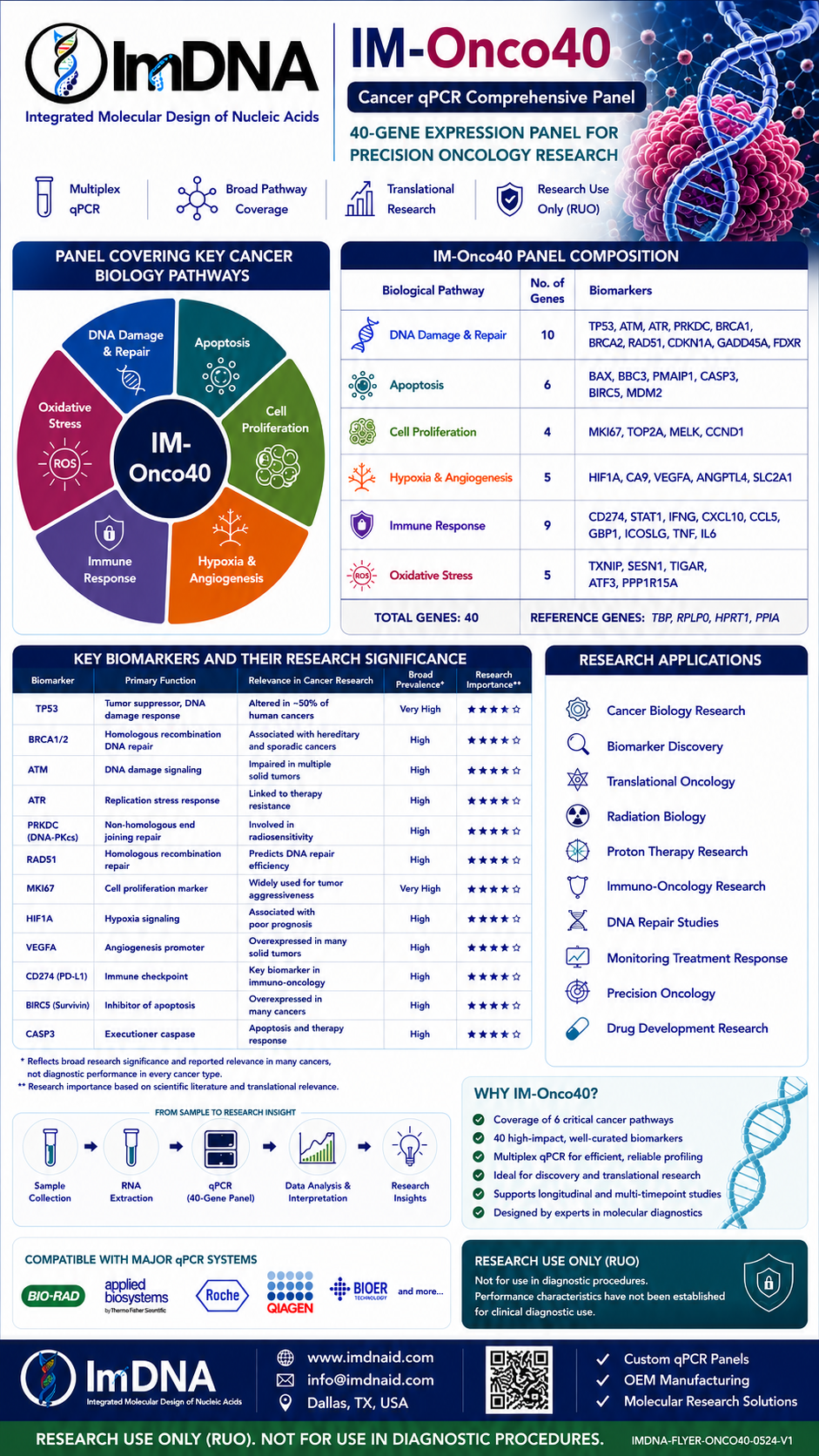
The IM-Onco40 Cancer qPCR Comprehensive Panel was developed by IMDNA (Integrated Molecular Design of Nucleic Acids) to support this need by targeting key biological pathways involved in cancer research.
3.1. Major Biological Pathways Covered
- DNA Damage & Repair
- Apoptosis
- Cell Proliferation
- Hypoxia & Angiogenesis
- Immune Response
- Oxidative Stress
Together, these pathways provide a broad molecular framework for investigating cancer biology and treatment response.
3.2. Designed for Translational Oncology Research
The IM-Onco40 panel supports a wide range of research applications, including:
- Gene expression profiling
- Cancer biology research
- Biomarker discovery
- Translational oncology
- DNA repair investigations
- Radiation biology
- Proton therapy research
- Immuno-oncology
- Tumor microenvironment studies
- Longitudinal treatment response analysis
By integrating biologically relevant targets into a single research panel, scientists can gain a more comprehensive understanding of cancer mechanisms while simplifying experimental workflows.
4. Supporting Research Beyond Reagents
At IMDNA, we believe that advancing molecular research requires more than high-quality assays. We collaborate with researchers to provide:
- Custom qPCR panel development
- Assay design and optimization
- Biomarker selection
- Scientific consulting
- Collaborative research support
Our goal is to help research laboratories generate reliable molecular data that contributes to meaningful scientific discoveries and advances in precision oncology.
5. Looking Ahead: The future of cancer research depends on a deeper understanding of the molecular pathways that govern tumor behavior. Gene expression analysis continues to provide valuable insights into these mechanisms, helping researchers identify novel biomarkers, understand treatment responses, and explore new therapeutic opportunities.
The IM-Onco40 Cancer qPCR Comprehensive Panel reflects IMDNA's commitment to delivering innovative molecular research solutions that empower scientists to decode cancer biology with confidence.
About IMDNA
IMDNA (Integrated Molecular Design of Nucleic Acids) develops innovative qPCR solutions for molecular research, biomarker discovery, and translational science. Through custom assay development, panel design, and scientific consulting, we help researchers transform molecular data into meaningful biological insights.
Explore how IMDNA can support your next oncology research project.
Research Use Only (RUO) Disclaimer: The information presented in this article is provided solely for scientific and educational purposes and should not be interpreted as medical advice, clinical guidance, or diagnostic recommendations. The IM-Onco40 Cancer qPCR Comprehensive Panel is For Research Use Only (RUO) and is not intended for use in diagnostic procedures or for patient management or treatment decisions. The biomarkers and scientific concepts discussed are based on current research and are subject to ongoing investigation, validation, and peer-reviewed scientific evaluation. References to genes or biological pathways do not imply established clinical validity, clinical utility, or regulatory approval.